Leeds United isn’t just a football club—it’s a story of passion, glory, and resilience. From roaring crowds at Elland Road to dramatic promotions, the journey of Leeds United is nothing short of epic.
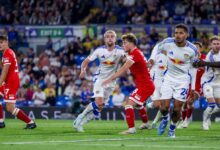
The Founding and Early Glory of Leeds United

Leeds United’s roots stretch back to the early 20th century, born from the ashes of a disbanded club and rising to become one of England’s most iconic football institutions. Their foundation laid the groundwork for decades of drama, triumph, and heartbreak.
Origins: From Leeds City to Leeds United
In 1919, after the Football League expelled Leeds City due to financial misconduct, a new club was swiftly formed to fill the void. Leeds United was officially established on October 17, 1919, at the Green Dragon Hotel in Leeds. The club was built on the remnants of City’s player roster and quickly gained support from the local community.
The early years were about survival and consolidation. Leeds United joined the Football League’s Second Division in 1920 and began building a fanbase that would become one of the most loyal in English football.
First Major Success: Promotion and Cup Runs
Under the management of Herbert Chapman in the 1920s, Leeds United began to show promise. Though Chapman left before major silverware arrived, his tactical innovations laid the foundation for future success. The club earned promotion to the First Division in 1924, marking their arrival among England’s elite.
- First promotion to the First Division: 1924
- Reached the FA Cup semi-finals in 1926
- Established Elland Road as a fortress in the 1930s
Despite fluctuating fortunes, the club remained competitive, showcasing the resilience that would become a hallmark of Leeds United’s identity.
“Leeds United is more than a club—it’s a way of life for the people of West Yorkshire.” — Fan chant, Elland Road
The Don Revie Era: A Golden Age for Leeds United
No chapter in Leeds United’s history shines brighter than the era of Don Revie. From 1961 to 1974, Revie transformed the club from underachievers into dominant forces in English and European football. His legacy is etched in the club’s DNA.
Revie’s Revolution: Tactics and Team Building
When Don Revie took over as manager in 1961, Leeds United had just been relegated to the Second Division. Revie implemented a disciplined, fitness-focused approach, emphasizing teamwork and consistency. He developed a youth academy that produced legends like Billy Bremner, Eddie Gray, and Norman Hunter.
Revie also introduced the now-iconic all-white kit, inspired by Real Madrid, symbolizing ambition and elegance. His system blended defensive solidity with swift counterattacks, making Leeds a feared opponent.
Trophies and Triumphs: The 1960s and 1970s
Under Revie, Leeds United won two First Division titles (1968–69, 1973–74), one FA Cup (1972), one League Cup (1968), and two Inter-Cities Fairs Cups (1968, 1971). These successes cemented their status as one of Europe’s top clubs.
- 1968: Won the League Cup, defeating Arsenal 1–0
- 1972: FA Cup victory over Arsenal in a controversial final
- 1975: Reached the European Cup final, losing to Bayern Munich
The 1974–75 season saw Leeds reach the European Cup final under new manager Brian Clough—though his tenure lasted just 44 days, the team’s success was a testament to Revie’s enduring influence.
Leeds United in the Premier League Era: From Glory to Relegation
The 1990s brought a resurgence for Leeds United, followed by a painful decline in the 2000s. The Premier League era was a rollercoaster of highs and lows, showcasing both the club’s potential and the dangers of financial mismanagement.
The Radebe and Kewell Years: Champions League Dreams
Under David O’Leary in the late 1990s and early 2000s, Leeds United became a powerhouse. With players like Lucas Radebe, Harry Kewell, Alan Smith, and Rio Ferdinand, the team played exhilarating football and reached the UEFA Champions League semi-finals in 2001.
Their run included memorable victories over Lazio and AC Milan, capturing the imagination of neutrals worldwide. The 2000–01 season saw them finish third in the Premier League and qualify for Europe’s elite competition.
Financial Collapse and Relegation
Despite on-pitch success, reckless spending and poor financial planning led to a crisis. The club accumulated over £100 million in debt, forcing the sale of key players. By 2004, Leeds United were relegated to the Championship, and by 2007, they hit rock bottom—relegated to League One for the first time in their history.
- 2002: Sold Rio Ferdinand to Manchester United for £30 million
- 2004: Relegated from the Premier League
- 2007: Relegated to League One, a historic low
This period remains a cautionary tale about the dangers of financial overreach in modern football.
Leeds United’s Championship Redemption: The Bielsa Revolution
After years of mediocrity, Leeds United found salvation in the most unexpected form: Marcelo Bielsa, the eccentric Argentine tactician. His arrival in 2018 marked the beginning of a new golden age.
Bielsa’s Arrival and Tactical Mastery
When Marcelo Bielsa was appointed in June 2018, few expected immediate success. Known for his intense training methods and high-pressing 3-3-1-3 formation, Bielsa demanded total commitment. His influence was transformative.
He revitalized players like Kalvin Phillips, Patrick Bamford, and Liam Cooper, turning them into leaders. Bielsa’s Leeds played a brand of football rarely seen in the Championship—relentless, attacking, and tactically sophisticated.
Promotion in 2020: Ending the 16-Year Wait
After 16 years in the second tier, Leeds United secured promotion to the Premier League in 2020 by winning the Championship. They finished first with 93 points, seven ahead of West Bromwich Albion.
- Played 46 games, won 31, drew 9, lost 6
- Scored 77 goals, the most in the league
- Bielsa became the first Leeds manager to win the EFL Championship Manager of the Season award
The promotion was celebrated across Leeds, with fans gathering (despite pandemic restrictions) to honor the team. It was a moment of catharsis for a long-suffering fanbase.
“When I arrived, I saw a club with history, pain, and passion. I wanted to give them dignity back.” — Marcelo Bielsa
Leeds United in the Modern Premier League: Challenges and Identity
Returning to the Premier League was a triumph, but staying there proved difficult. Under new managers and amid financial constraints, Leeds United has struggled to maintain consistency.
Post-Bielsa Transition: From Marsch to Farke
After Bielsa’s departure in 2022, Leeds appointed Jesse Marsch, who attempted to continue the high-pressing style. However, results faltered, and the club was relegated in 2023 after a dramatic final day.
In 2023, Daniel Farke was appointed, bringing a more pragmatic approach. His task: rebuild the squad and guide Leeds back to the top flight with sustainable growth.
Financial Fair Play and Squad Restructuring
Leeds United has faced scrutiny over Financial Fair Play (FFP) regulations. The club reported losses of over £100 million between 2020 and 2022, leading to a Premier League investigation.
To comply with FFP, Leeds had to downsize their wage bill and sell high-earning players like Raphinha and Kalvin Phillips. This forced a rebuild based on youth and smart recruitment, a strategy Farke is now implementing.
Elland Road: The Heartbeat of Leeds United
Elland Road isn’t just a stadium—it’s a symbol of Leeds United’s soul. Opened in 1897, it has witnessed every high and low in the club’s history.
History and Architecture of Elland Road
Located in the Beeston area of Leeds, Elland Road has a current capacity of 37,792. It has undergone multiple renovations, including the construction of the South Stand in the 1970s and the East Stand in the 1990s.
The stadium features four stands: the West Stand (Main Stand), East Stand, South Stand (Leeds Road End), and North Stand (Don Revie Stand), named in honor of the legendary manager.
Fan Culture and Matchday Experience
Leeds United fans, known as “The Whites,” are renowned for their passion. The chant “We Are Leeds!” echoes through Elland Road, creating an intimidating atmosphere for visiting teams.
- Supporters’ Trust: Leeds United Supporters’ Trust (LUSTR) plays an active role in club governance
- Matchday rituals: Pre-game pints at local pubs, singing in the stands
- Global fanbase: Over 100 official supporters’ clubs worldwide
The club’s motto, “We Are Leeds,” reflects the deep connection between the team and the city.
Leeds United’s Rivals and Derby Days
Rivalries define football, and Leeds United has several fierce ones. These matches are more than games—they’re battles for pride.
Yorkshire Derby: Leeds vs. Sheffield United
The rivalry with Sheffield United is rooted in geography and industrial history. Matches between the two are known for their intensity and physicality.
Though not as frequent since Sheffield United’s relegation, the fixture remains a highlight for fans. The last league meeting in 2023 ended in a 2–1 win for Leeds at Elland Road.
North vs. West: Leeds vs. Manchester United
The rivalry with Manchester United is more cultural than competitive. While not an official derby, matches between the two are charged with historical tension, especially during the Revie era when Leeds dominated English football.
Fans often cite the 1975 European Cup final, where Leeds lost controversially to Bayern Munich, as a moment where United supporters celebrated Leeds’ misfortune—fueling the animosity.
Leeds United’s Youth Academy: Producing Future Stars
Leeds United’s academy has long been a pipeline for talent. From Billy Bremner to Harry Wilson, the club has nurtured players who’ve made their mark at the highest level.
History of the Academy System
Established in the 1960s under Don Revie, the academy emphasized discipline, skill, and loyalty. It produced legends like Eddie Gray and Norman Hunter.
In recent years, the club has restructured its youth setup, aligning with Elite Player Performance Plan (EPPP) standards. The Thorp Arch training facility serves as the hub for youth development.
Recent Academy Graduates
Modern graduates include:
- Jack Harrison: Now at Everton, started at Leeds’ academy before moving to Manchester City
- Sam Greenwood: Attacking midfielder who debuted in 2020, later sold to Bournemouth
- Illan Meslier: Though signed from Lorient, he was only 20 when he joined and developed into a top keeper under Leeds’ system
The club continues to invest in youth, aiming to balance financial sustainability with on-pitch success.
Leeds United’s Global Impact and Cultural Legacy
Beyond football, Leeds United has influenced music, fashion, and popular culture. The club’s identity transcends sport.
Music and Media: Leeds in Pop Culture
Bands like Kaiser Chiefs and The Pogues have referenced Leeds United in songs. The 2020 promotion was featured in the Amazon Prime documentary Take Us Home: Leeds United, which captured Bielsa’s impact and fan emotion.
The documentary became a global hit, introducing Leeds United to new audiences and reinforcing the club’s narrative of resilience.
Fashion and Brand Collaborations
Leeds United’s all-white kit has become a fashion statement. Collaborations with brands like adidas and ASOS have brought the club’s aesthetic to streetwear.
Limited-edition kits and retro designs sell out quickly, showing the club’s growing global appeal.
What is Leeds United’s most famous victory?
Leeds United’s most famous victory is arguably their 1–0 win over AC Milan in the 2000–01 UEFA Champions League quarter-finals. Played at Elland Road, the match saw Alan Smith score the decisive goal, sending Leeds to the semi-finals for the first time in decades.
Who is the greatest Leeds United player of all time?
While subjective, Billy Bremner is widely regarded as Leeds United’s greatest player. A symbol of the Revie era, Bremner captained the team to multiple titles, known for his leadership, tenacity, and skill. He made over 770 appearances and remains a club legend.
Why was Marcelo Bielsa so important to Leeds United?
Marcelo Bielsa transformed Leeds United’s culture and playing style. He instilled discipline, intensity, and a winning mentality, ending a 16-year absence from the Premier League. His influence extended beyond tactics—he restored pride and identity to the club.
When did Leeds United last win a major trophy?
Leeds United last won a major trophy in 1975, when they claimed the FA Cup by defeating Liverpool 1–0 at Wembley. Since then, the club has not won the Premier League, FA Cup, or League Cup, making the pursuit of silverware a key goal for the future.
What is the capacity of Elland Road?
Elland Road has a current capacity of 37,792, making it one of the largest stadiums in the Championship. The club has discussed expansion plans to increase capacity to over 50,000 in the future, pending promotion and financial feasibility.
Leeds United’s story is one of enduring passion, dramatic highs, and painful lows. From the glory days under Don Revie to the Bielsa-led revival, the club has remained a symbol of resilience. Though challenges remain, the spirit of Elland Road burns bright. As long as the fans chant “We Are Leeds,” the dream of returning to the top endures.
Further Reading:
